
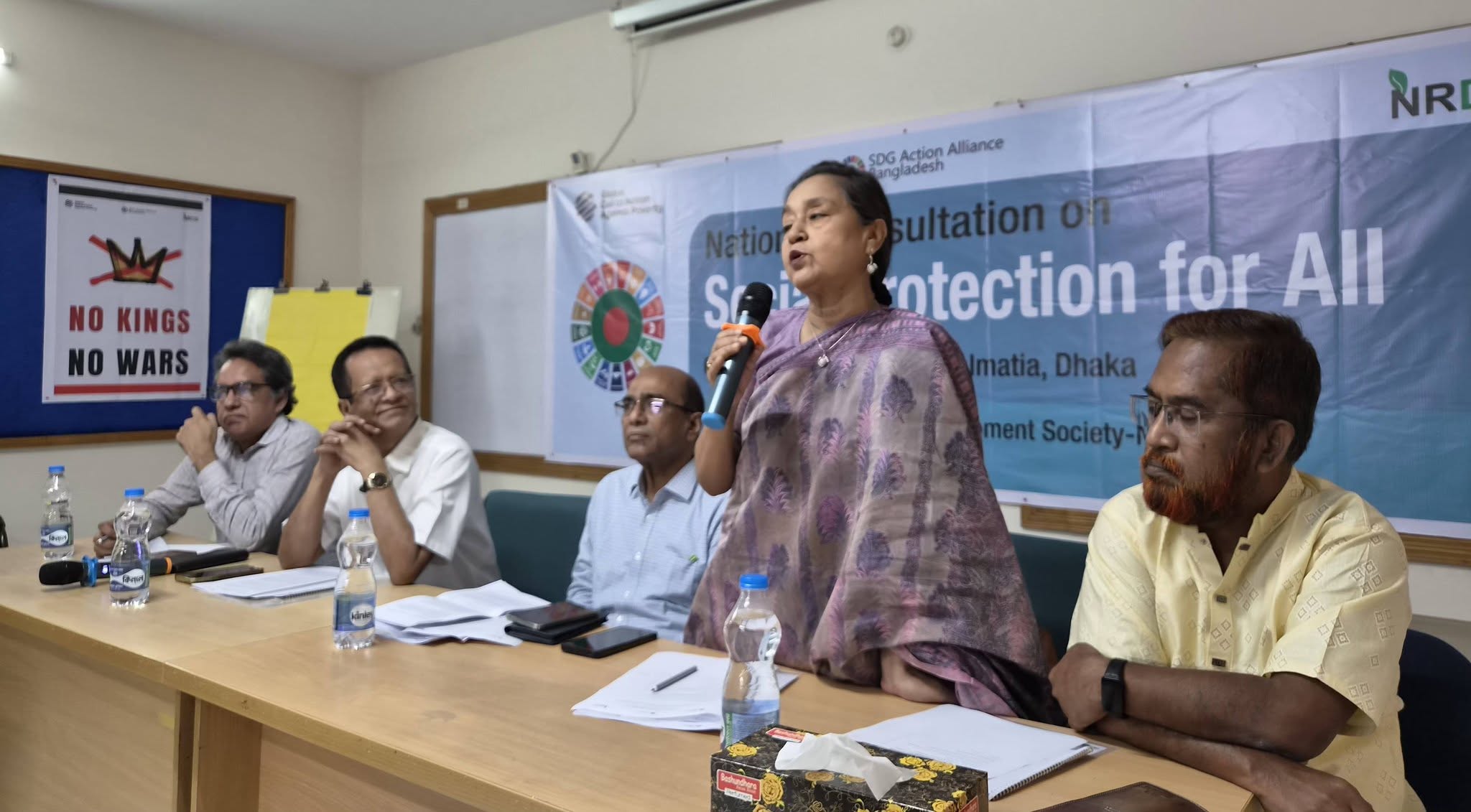
A national consultation on Universal Social Protection was held today at the NGO Forum auditorium in Dhaka, jointly organized by the SDG Action Alliance and GCAP. Civil society representatives called for establishing a rights‑based universal social protection system in Bangladesh to address poverty, inequality, and climate vulnerability. A draft position paper titled “Promoting Social Protection for All” was presented at the event.
Speakers noted that although the government has undertaken several positive initiatives, including the ‘Family Card’ program, the allocation for social protection remains far below the actual need. In the 2025–26 fiscal year, the allocation amounted to only 1.87% of GDP, significantly lower than the South Asian regional average. With the national budget for FY 2026–27 scheduled to be placed in Parliament on 11 June, participants urged the government to increase social protection spending and ensure strategic, well‑planned investments in the sector.
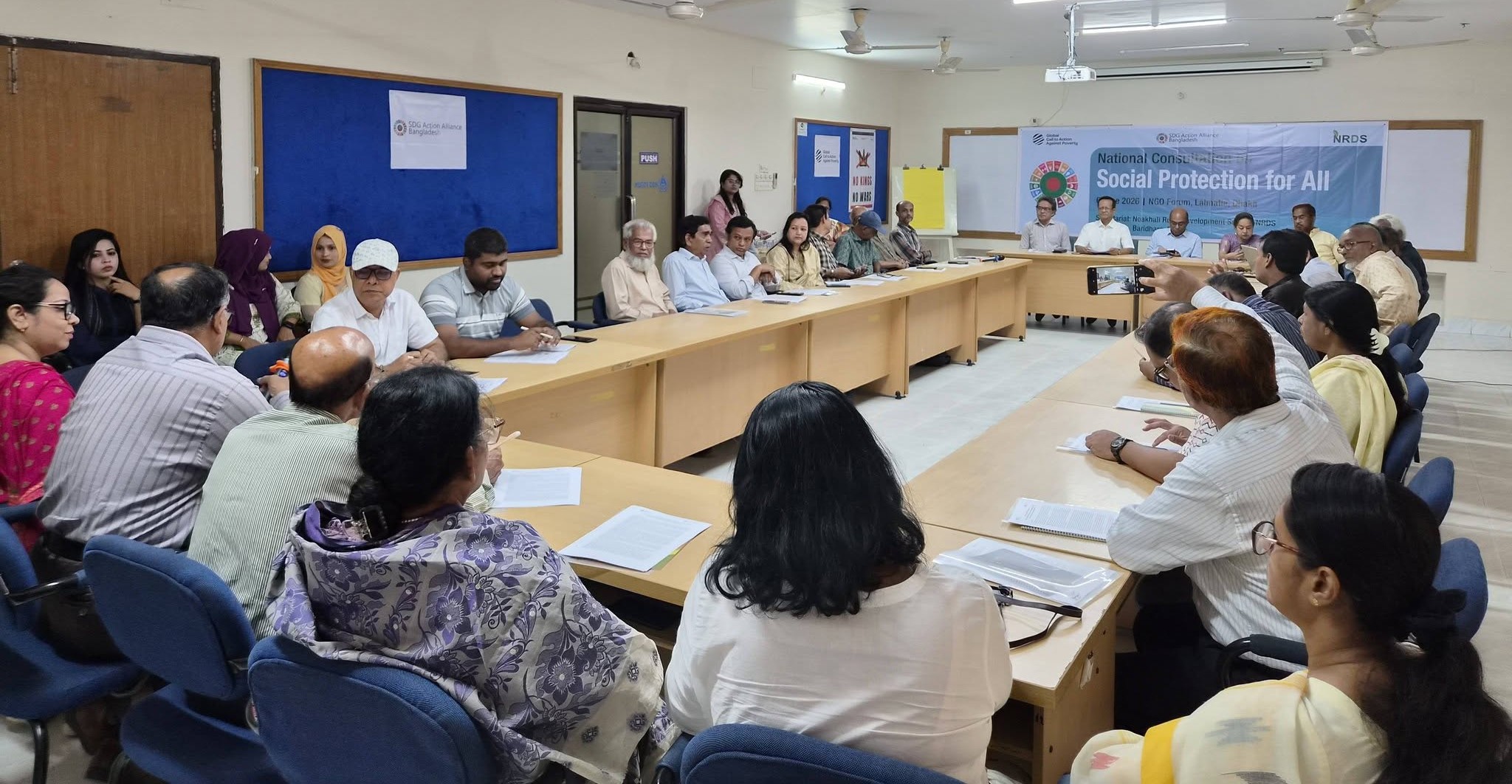
Key Demands from the Consultation:
Speakers demanded that the allocation for social protection be raised to at least 20% of the upcoming national budget and gradually increased to a minimum of 4% of GDP in the coming years. They emphasized that such investment would enable:
- Adjusting benefit amounts in line with inflation.
- Ensuring universal, life‑cycle‑based protection for destitute women, widows, the elderly, persons with disabilities, indigenous peoples, climate‑vulnerable populations, and other marginalized groups.
The speakers stressed the need to prioritize women, children, marginalized communities, and indigenous groups in social protection programs; increase allocations for community health services; ensure proper utilization of funds; and safeguard the rights of women agricultural workers. Speakers expressed that the government’s commitment to inclusive development should be reflected in the upcoming budget so that no citizen is left behind.
Consultation Leadership & Discussants
The consultation was chaired and moderated by Abdul Awal, Executive Director of NRDS. Among the discussants, Dr. Dibalok Singh of DSK, Mr. Delwar Hossain, Badrul Alam of BKF, Asma Akter Mukta of RASIN, Nazer Chowdhury of ISDE, Raha Nabakumar of Gandhi Ashram, Mehnaz Mala of COSMOS, Abdus Salam of Development Wheel, and Nurul Alam Masud of PRAN and Convener of KHANI, also spoke at the event.
Speakers urged the SDG Action Alliance to further strengthen its consultative and advocacy efforts at both national and grassroots levels on behalf of marginalized communities.