Women, persons with disabilities, landless people, and indigenous communities face the highest climate risks but are often excluded from planning and decision-making. Adaptation programs sometimes fail to reach those who need them the most.
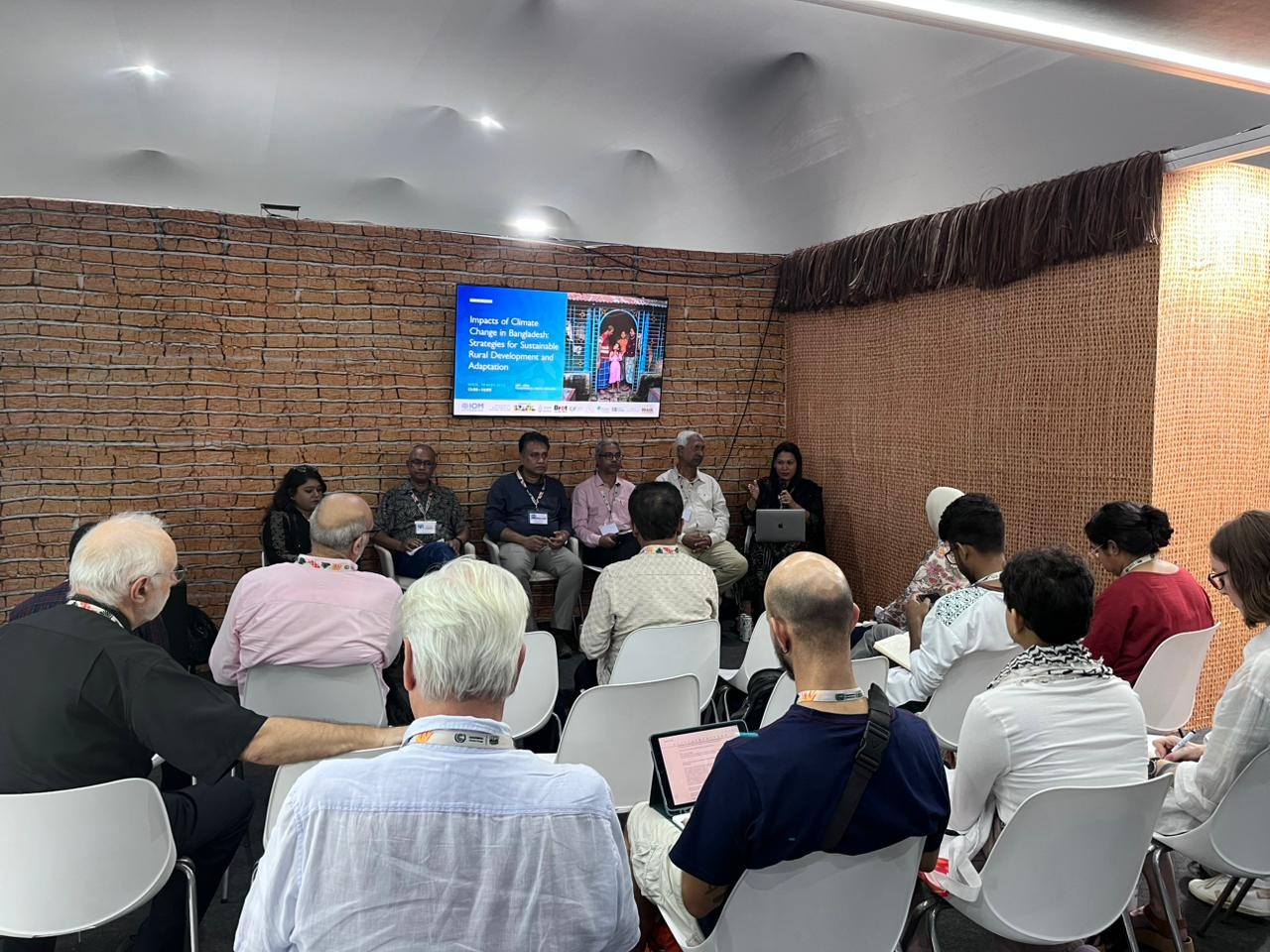
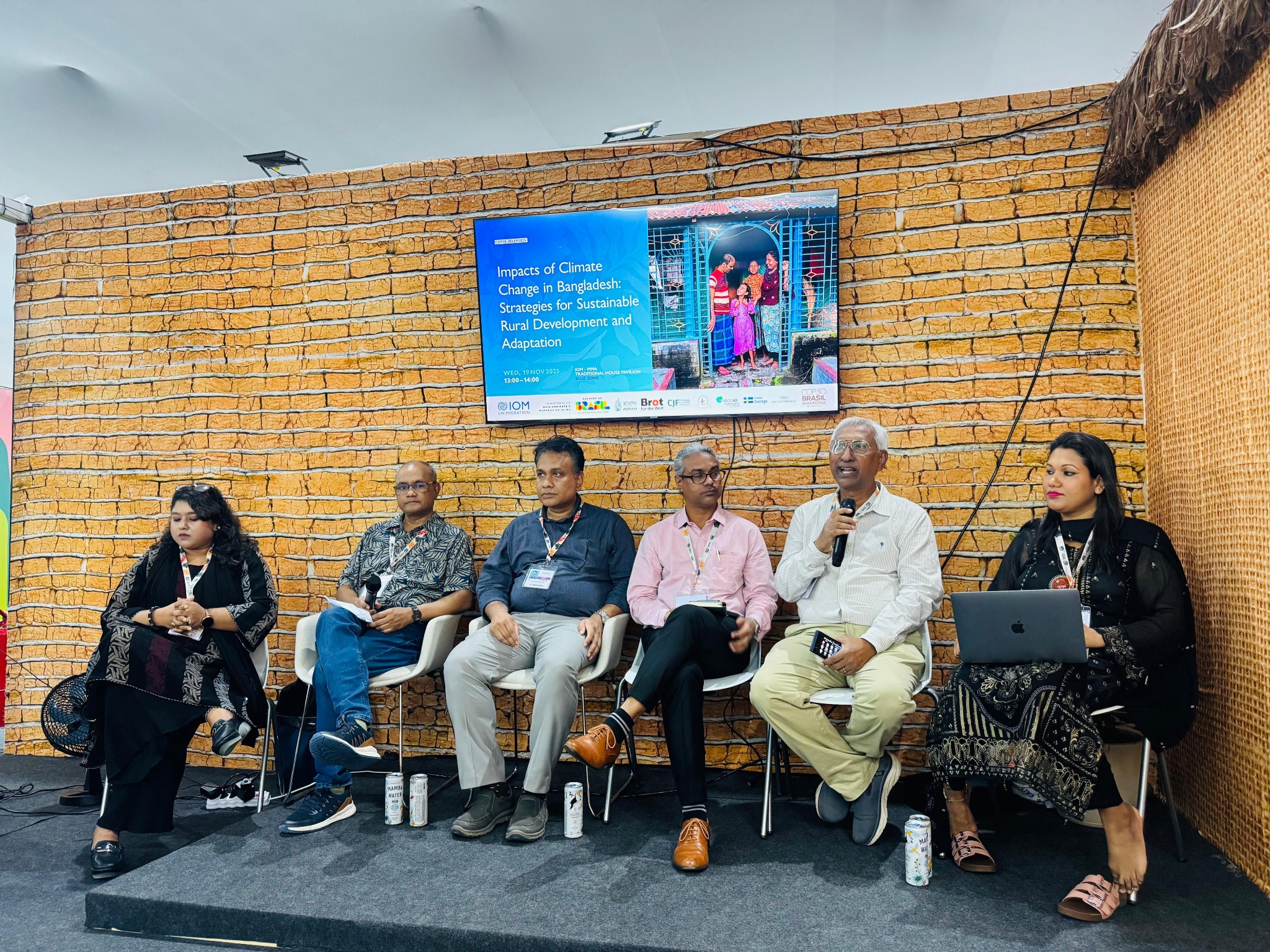
Abdul Awal, Executive Director of NRDS and the National Coordinator of GCAP Bangladesh, spoke at the COP30 side events yesterday.
He added that the rising sea levels, saline intrusion, and erosion are making traditional livelihoods—especially agriculture and fisheries—less viable. Large-scale internal migration is increasing and people’s lives become more vulnerable.
The Call for Climate Finance vs. Debt
“Global commitment for loss & damage and adaptation finance are the most urgent actions we need. We need reparation and financing for adaptation, not debt—because debt creates more burden that curtails the social protection initiatives of the Government.”
Essential Steps for Bangladesh’s Climate Future:
Bangladesh’s climate future depends on a justice-based approach that centers the needs and rights of frontline communities. The following areas are essential:
- Stronger local institutions & decentralised financing.
- Inclusive planning for frontline communities.
- Global responsibility for climate reparations.
He demands the financing for adaptation to be a minimum of USD 1.3 trillion per year till 2035, as per the Baku to Belem road map proposal.
“We want to see global responsibility taking place. We hope for a future and justice for the people who are suffering most from the climate crisis.”